Skip to content

I. Powder Coatings: The New Trend in Eco-Friendly Coating
Driven by the dual demands of environmental protection and efficiency, the modern industrial coating sector is undergoing a profound transformation. Powder coatings, representing green coatings, are increasingly gaining widespread attention. Whether in home appliances, automotive, or construction, this solid powder coating is replacing traditional liquid paints, leading the future development direction of coating technology.
II. What Are Powder Coatings? Unveiling Their Basic Composition
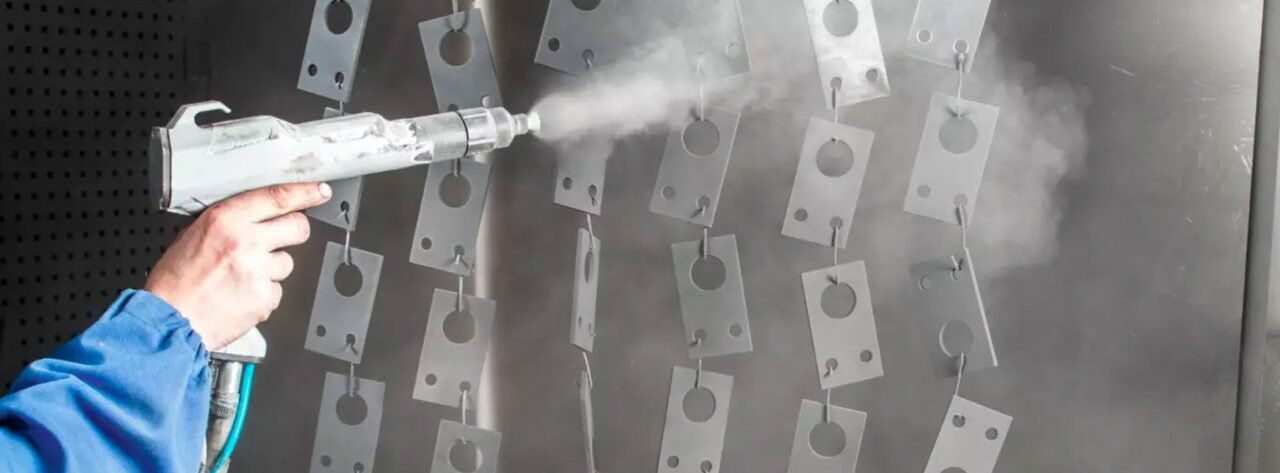
Powder coating is a 100% solid, solvent-free synthetic resin coating in powder form. Unlike traditional solvent-based coatings, its dispersion medium is not solvent or water, but air. This coating is composed of polymer resins, pigments, fillers, and additives. It remains stable at room temperature and, during application, electrostatically adheres to the workpiece surface. After heating, it melts, levels, and cures to form a durable film.
Powder coatings can be divided into two main categories based on the nature of the film-forming material:
- Thermoplastic Powder Coatings: Use thermoplastic resins as the film-forming material, such as polyethylene, polypropylene, polyamide (nylon), and polyvinyl chloride (PVC). These coatings melt at the application temperature and solidify into a film upon cooling, requiring no complex curing devices.
- Thermosetting Powder Coatings: Use thermosetting resins as the film-forming material, such as epoxy resin, polyester resin, and acrylic resin, and require the addition of hardeners (curing agents). During the baking process, the resin in these coatings first melts and then chemically cross-links to form a flat, hard film.
III. Multi-Sector Applications and Performance Characteristics of Powder Coatings
The application areas for powder coatings are extremely wide, found everywhere from everyday household items to high-end industrial manufacturing. They are primarily used in electrical equipment, metalware, bicycles, automotive parts, chemical equipment, pipeline interiors, as well as home appliances and furniture.
This type of coating provides both protective and decorative functions. It helps metal products resist corrosion, chemical erosion, and mechanical wear, extending product lifespan while offering a rich variety of aesthetic effects.
1. Advantages of Powder Coatings
- Prominent Eco-Friendly Characteristics: Non-toxic, free of solvents and volatile toxic substances, eliminating issues related to poisoning, fire, and “three wastes” (industrial waste gas, wastewater, and solid waste) discharge.
- High Resource Utilization Rate: Oversprayed powder can be collected and reused, achieving a utilization rate of up to 99%.
- High Application Efficiency: A single application can achieve a sufficiently thick film, often eliminating the need for a primer, and is easily automated.
- Excellent Coating Performance: The coating is dense with good adhesion, impact strength, and toughness. It offers excellent resistance to chemical corrosion and good electrical insulation properties.
- Safe and Convenient Storage & Transportation: Contains no solvents, posing no fire risk.
2. Limitations of Powder Coatings
- Uneven powder application on edges and corners.
- Difficult to conceal film defects after curing.
- High curing temperature requirements, limiting usable substrates.
- Not conducive to frequent color changes.
- Not suitable for heat-sensitive substrates or objects that cannot be heated.